If you’re not interested in reading curmudgeonly writing, skip this entry. I’ll be back to my regular upbeat writing personality soon enough. Today, however, is not that day.
I groused on Facebook this morning that Halloween is so NOT my holiday. My plan is to steer clear of it. Sorry, folks, but I’m willing to own the title my friend Angela applied to me: “The Scrooge of Halloween.” Guilty.
Have I worn costumes on Halloween? Yes, occasionally, and by that I mean every 5-10 years or so. I wore an Indiana Jones costume at a science fiction convention in 2008, and I didn’t wear it well because I was the better part of 30 to 40 pounds overweight. And I brought said costume because others more or less expected it of me, it wasn’t something I was excited to do. Which brings me to an important aspect of Halloween: it’s very much an extrovert’s holiday, as the goals are to stand out, be loud, go to a lot of parties, and look or act oddly around others. I’m odd enough already.
I’m also not a fan of horror, terror, and other off-kilter emotions that usually result from experiencing or witnessing something awful or terrifying. People actually pay good money to experience these sensations in a theater and it baffles me. If you don’t enjoy those feelings in reality, as I do not, you probably don’t understand the desire to have them imposed artificially. Mind you, I do read and write fiction on occasion, but most of my stories aren’t in the Stephen King genre.
And before someone tells me to “lighten up,” spare me the lecture. I’ve heard it. All this stuff is just not my thing. I understand some people–even introverts–dig Halloween. It’s an opportunity to wear a mask and be someone different for a day. Bully for you. Glad you enjoy yourselves.
I’m more of a Christmas guy. The emotional tone and emphasis are more in line with my mood: giving, celebration, maybe a little kindness or solemnity thrown in. But hey, that’s me. Speaking of Christmas, there’s something else I’ve noticed: generally people who really REALLY love Halloween are often not that big on Christmas. Go figure.
There are other snobby, uptight things I could write, but I’ll leave it at that. I’m not trying to be a spoil sport for others, just explaining why I don’t get all that excited about October 31st. However, Halloween candy gets marked down 50% tomorrow. I’ll see you then.
Sometime in the last year I decided to start making my salads upside down.
Some of you might get this immediately, especially if you’re not a huge fan of lettuce, spinach, kale, arugula, or any of those other leafy greens that always seem to form the base of any salad you’ve seen. That bed of green stuff is covered with cucumbers or tomatoes or something mildly interesting, and then those items are garnished with cheese, olives, peppers, and things that actually stimulate your taste buds.
I frickin’ hate salad because eventually, once I get through the interesting stuff on top, I’m left with lettuce. And like I said, I’m not a fan.
So earlier this year, being the only grownup in my home, I made the unilateral decision to put the interesting stuff into the salad bowl first: cheese, peppers, olives, marinated artichokes, what have you. Then the tomatoes go in, then cucumbers and, occasionally, the stupid lettuce. No, it won’t win any aesthetic or culinary awards, but it’s finally in a form I don’t mind eating because the good stuff comes at the end.
I work and pay my bills this way, too, so I guess that’s where it started. I try to do the big, ugly, un-fun projects (editing or re-editing large documents, for example) first so I can savor the time doing things that I enjoy, like creative copy or maybe even fiction. I pay the big, scary bills (rent, credit card, utilities, car payment) before I set aside money to go out later in the week.
The logic to this approach, is that I need to do the boring, unglamorous stuff first so I have something to look forward to at the end of it. Consume all that interesting stuff up front and you’re left with a long, hard slog afterward.
Next step: eating ice cream sundaes upside down. Anyone with me?
In the last month I’ve been indulging in a bit of Mars mania. I read Andy Weir’s book The Martian, followed by the movie starring Matt Damon, which was based upon the book. On the heels of this double helping of The Martian I read Rescue Mode, a new science fiction novel by Ben Bova and a NASA friend of mine, Les Johnson.
Both books go to superb lengths to achieve engineering realism in depicting hardware for getting to and living on Mars. The Martian focuses on one man who is stranded on the red planet while Rescue Mode concentrates on the efforts of a crew of eight astronauts whose vehicle is severely damaged on the way to Mars. Different problems, but same stakes: survival beyond the Earth.
The Martian
The Martian is written entirely in the first person and the protagonist–portrayed well in the movie by Matt Damon–concentrates more on the lone astronaut’s Robinson Crusoe-type challenges with nature using the tools at hand. The movie gives more life to the characters “off screen” in the book. I found the book hilarious, probably because it was easy to identify with a sarcastic white guy who’s a Chicago Cubs fan and has an occasionally profane manner of expressing himself.
The movie version of astronaut Mark Watney is a bit more subdued, perhaps not quite as juvenile, but an admirable character nonetheless. In fact I’d go so far as to say that Matt Damon’s acting is excellent while the movie overall is simply good. The movie has some long stretches of just watching a rover move across the lonely Martian landscape. Or, as someone pointed out about The Lord of the Rings, just a lot of walking. The novel of The Martian needs to keep the reader engaged–in my case, I devoured the book in a couple of days–and so has a few more problems to solve. And there’s just more opportunity for smart remarks by the narrator.
Another thing Weir (and director Ridley Scott, to his credit) handles well is giving all the technology a real-world feel, complete with acronym-heavy jargon, rules and regulations, and a good feel not just for what things are designed to do but what they can be made to do in case of emergencies. Even duct tape makes a good showing.
Perhaps the biggest downside to being faithful to the book is that Weir’s (Watney’s) profanity does not make the movie exactly kid-friendly. S-bombs, F-bombs, cussing galore. Depending on how old your kids are and how much profanity they’re used to, they can probably start watching this film at around age 10-12 (the film is PG-13, though I’m surprised it didn’t make R). It’s not that I’m a huge prude when it comes to cussing, but that does mean limit the age range for kids to watch the story and get inspired by its can-do spirit. Regardless, the book and the movie are great fun and manage to capture an Apollo 13 level of what author David Brin calls “competence porn” set in space as Watney moves from bare survival to problem solving to transcending his situation. I might need to go back to the theaters for another shot at viewing it on the big screen. Worth it.
Rescue Mode
Rescue Mode, which to my knowledge isn’t being made into a movie yet, is a different project. It still features peril on a Mars mission and requires a lot of technological competence to put things right. However, instead of concentrating on one character’s efforts or point of view, Bova and Johnson write about a crew of eight: four men, four women, with a mix of nationalities and races, plus a variety of NASA people and politicians back on Earth. In this way, Rescue Mode is a more mature (in the literary sense), complex, and ambitious work.
The crew includes some rivalries, sexual tension, and personality clashes that add a bit of humanity to the astronauts. The Martian, by contrast, isn’t quite as diverse or nuanced–the primary motivation for most of the off-stage players is dedication to duty. On the whole, the character interactions are handled well, including some eye rolling by the other characters when one of them says something that might be taken as stereotypical in some fashion.
The book is a little slow to start as we’re introduced to the crew and the political players, but once the crew get into space, the pace picks up quickly. You might wonder what sort of political drama is included in a book ostensibly about space exploration. In this case, the authors chose to depict a battle in Washington, DC, over the continued funding of human space exploration, with the president for it and an ambitious senator trying to shut down the Mars program as “too dangerous” and “wasteful.”
One thing I found interesting in comparing The Martian and Rescue Mode is that both books seem to have used the same (or similar) NASA reports in designing their spacecraft and other hardware. Not surprising, I suppose–if NASA manages to get to Mars in the near future, realism demands that you use the hardware they say they’re going to use. Which brings me to a few concluding thoughts about Mars exploration in the real world of 2015.
Meanwhile, back in the real world…
Both of these books assume something that right now is not foreseeable, or maybe even realistic: the political will to spend the money and time to build all that NASA wants to build to get humans to Mars. The Martian just assumes that it happened without questioning the how or why. Rescue Mode takes a shot at explaining how it might be done with solid support from a U.S. President. Bova and Johnson note that their mission takes place late in the supporting president’s term and that the program would be vulnerable to the next president to come along–even if that president came from the same party. I don’t fault Andy Weir for this–he’s telling an rollicking good adventure story. Bova and Johnson wrote an adventure story but had larger fish to fry, as they try to make a larger political case for human spaceflight. Realistically, any actual future that includes a massive human mission to Mars or even back to the Moon will need to address the politics of it.
Another political point Rescue Mode makes is that the people most likely to benefit from closing or cutting back on NASA-led human space exploration would be commercial entities like SpaceX. Indeed, Elon Musk has stated that he wants to send people to Mars. The book includes a spaceport in New Mexico and makes reference to other commercial enterprises in Texas, Florida, and on the Moon. The real political battle over human spaceflight is not really between people who want it and those who want to close it down but between differing visions of how it should be carried out–and by whom: should the future glory go to NASA or a dedicated billionaire? The Martian doesn’t depict this battle per se, but it clearly stands behind NASA getting the job; Rescue Mode shows NASA having the job but facing pressure from others who would prefer that they don’t.
If it seems strange to be pro-space exploration but anti-NASA, it probably is–just as it’s strange that a Democrat administration is more supportive of commercial space while Republicans are favoring a large government program. However, if you spend some time observing the space business in the 21st century, you will see that we live in strange times. Welcome to the future.
I have spent enough time on my own with my thoughts to understand that I’m an introvert. I’m single, and happily so. I depart social gatherings of >5 people within about two hours. I spend extended periods of time taking walks on my own or hanging out at home with no great desire to require the presence of other people.
And yet…
At last count, I had over 1,100 LinkedIn contacts and something like 860 Facebook friends. My primary place for walking around “alone” is Epcot at the Walt Disney World. Certainly those can’t be the behaviors of an introvert!?
Actually, they can. The internet is a curious place, and a great environment for an introvert who normally wouldn’t talk to others much to open up and share his or her creativity. Here’s the thing extroverts miss: you don’t have to talk to make friends on the internet.
Okay, and yes, I do actually talk to people in public. This has apparently become a misconception among those who speak more often. I’ve run conferences. I’ve managed events for crowds of talkative cheerleaders. It can be done, but there is a price to be paid. That price comes in the form of physical tiredness from trying to give every person you meet the benefit of your full attention. That’s simply the way introverts are wired. We can’t do “small talk” or “chitchat” without wanting to know the how and why behind why someone said something. Call it Compulsive Analysis Disorder if you like.
If you’re someone who spends a lot of time alone, you get used to certain things, like time, peace, and quiet to collect and organize your thoughts. I made the mistake of attending a college football game in person yesterday, and I was a bit overwhelmed and drained by all the noise around me. I’ve been watching football games at home, at the homes of friends, or in saloons for over 25 years. The number of people and level of noise present in an actual stadium is considerably more than what I normally experience in my preferred locations. In similar wise, I haven’t attended a live concert in 15 years and am no longer a regular movie goer. Both activities involve large crowds, over-stimulation (too much/too loud noise), and a need to speak more loudly than I might prefer.
All that said, I spent most of the first half of my life rather talkative–even too loud or outspoken, now that I think about it. That made me (initially) a good fit for Disney, where talkative and sociable are an accepted and expected part of the schtick. However, it was in my twenties that I came to realize that I was happier in quieter areas, away from large groups of people. When the opportunity came up to apply for the Disney Cruise Line, I considered it, then recoiled in horror: imagine interacting with the public all day but then at the end of the day being unable to drive some distance away from the crowds and enjoy the peace of your own space! Cabins are shared on the cruise ships, and there really isn’t anywhere you can go to “escape.”
It wasn’t until I started working as a writer for a living (a relatively quiet job) that I began to relax with the Mouse. And as I was moving on to technical writing, I realized it was just in the nick of time: the “Guest Letters” department was about to be transitioned from a literary to primarily a verbal activity, with guest concerns handled over the phone. The thought of talking to strangers all day–apologizing for problems, no less–was a bit too much to take. One of the office extroverts was excited–she couldn’t think of anything better than to do that all day! So even before “introversion” became more of a social [sic] phenomenon, I was learning a lot about how I operated among people. And while I can work with groups–even large crowds–that doesn’t mean I prefer to do it every single day. If I do have to work with large groups multiple days in a row, I come out of it tired, grouchy, and in deep need of time alone.
Again, I have friends who are surprised when I tell them I’m an introvert because I’m “so friendly” at work. Introverted does not equal unfriendly. It’s perfectly possible to be friendly and talkative as an introvert. However, at the end of the day, that introvert often will go home or some other quiet place to savor silence–others’ and their own. It’s not a reflection of others (most of the time), it’s simply the way we’re wired. And it’s a mistake to underestimate an introvert’s ability to interact with others. We understand people rather well; but we can be selective about how much we put that understanding to work. Just some food for thought from an introvert with more connections than one might find “normal.”
One task I enjoy doing as a professional communicator is taking meeting notes. Without bragging too much, it’s a thing several leaders have valued in my skill set because I can listen to a lot of information and identify the main point or the most important point, which is a slightly different skill set. My mother would call it “reading between the lines.”
I haven’t written about this topic before, partly because I try to avoid bragging, but also because I am uncertain how to teach others how to do it. I will give it a shot here, though (the word “essay” is French for “try,” after all).
Summaries (or lack thereof)
Some meeting leaders are kind enough to summarize a decision that was made or an event which has transpired, making it easy to pass on “the big news” afterward. However, sometimes meetings end ambiguously, without a clear decision or summary. Could that be the most important point? If the sole purpose of the meeting was to reach a decision, yes indeed.
Scope of impact
You could be listening to fact upon fact upon fact (try sitting through a monthly status meeting for a launch vehicle sometime). This mass increased by X pounds. The thrust of the engine increased by Y percent. The flight test moved to Z date. Obviously if you’re a structural or propulsion engineer, you might have different priorities. However, if you need to go back and report on a fact that affects everybody, which item will get your attention? The flight test date, obviously.
Other “hot button” items are facts that affect the budget, workforce, or ability of an organization to deliver a product or service at the agreed-upon level of quantity or quality. In short, will something that you heard affect the organization’s ability to accomplish its primary goal or mission?
Emotional impact
This could take many forms, from good to bad. Did someone get a promotion? Have layoffs been announced? Did people come out of meeting upset? Angry? Elated? Was there a long-drawn-out argument? Human dynamics are important and can sometimes be more important than any facts that are announced during a discussion.
Other thoughts
The “most important” fact in a meeting will sometimes vary by the priorities expressed by your organization, culture, or individual leader. When in doubt, it doesn’t hurt to ask: “Is there anything you want me to listen for?” Sometimes priorities change. Sometimes (and I’m sure every meeting leader is about to cringe reading this), there is no important information to come out of a meeting. It happens. Odds are, if you say that “nothing important” happened, you can record every individual fact at an equal level of importance and let the meeting minute readers make their own judgments. Still, prioritizing information is a useful skill to have. Keep it in mind the next time you’re sent to a meeting.
I was in Broward County, Florida, this past week to present the Soil Moisture Active Passive (SMAP) citizen science project. Because it was an all-day thing, I booked a hotel for the night before so I wouldn’t have to get up at 0-dark-30 to drive down from Orlando. Because I was operating on someone else’s budget, I decided to go for the lowest rate feasible. That was probably my first mistake.
Anyhow, I arrived at the resort, an “all-inclusive” place in the neighborhood of Fort Lauderdale. My father, a Florida resort aficionado, indicated that the place I’d selected “used to be quite a place,” so I went in with a somewhat hopeful attitude.
The lobby was a bright green I’d not seen since the ’80s. The fixtures and furniture were similarly in need of updating. Whatever. I checked in, and the front desk host was reasonably helpful. That would be the last time I encountered a helpful, friendly person on the staff.
I knew I was in trouble when I saw and smelled the hallway carpet. Being a connoisseur of physical ailment-inducing psychedelic carpets, I almost missed such crazy patterns. Instead, I faced a faded gray-green stretch with stains.
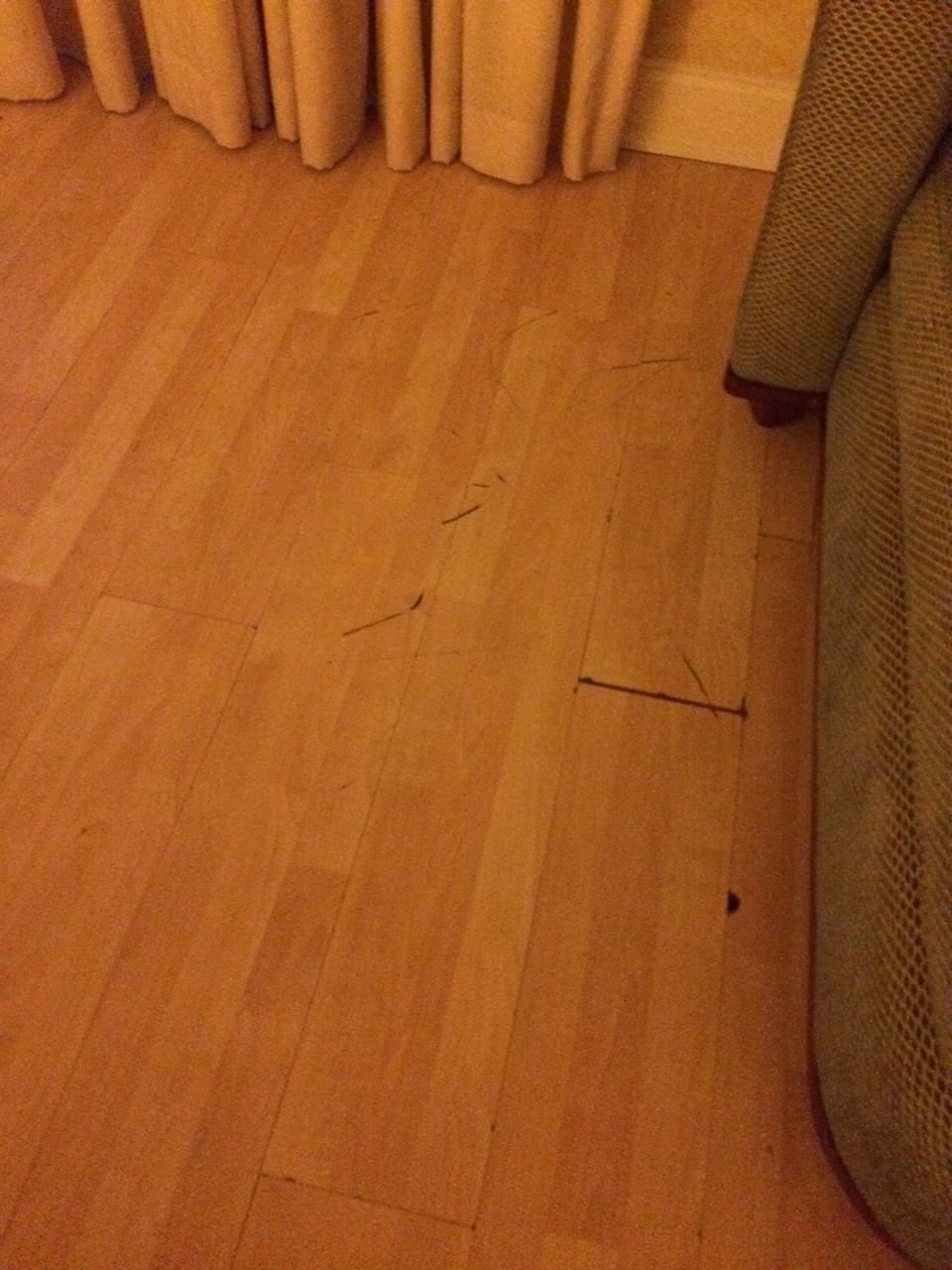
Then I got to my room. Instead of carpeting, I saw hard wood, scratched up, with gaps between several of the boards.
I decided to head down to the hotel restaurant/saloon, which was empty except for a couple staff members. The most prominent feature of the restaurant–another place that hadn’t been seriously refurbished since the ’80s or ’90s–was the booming music overhead, which played hip hop (not my favorite) on a staticky channel. The young lady behind the bar wanted to know if I was interested in ordering anything. I said that I’d give it very serious thought if she’d change the radio station. She seemed to resent the request, tried to ignore it, then tried it.
The volume went down, but the station didn’t change for a while. Then it did change to some other hip hop station, and the static remained. I rolled my eyes and checked out the menu and the collection of bottles behind the bar. The menu comprised bar snacks. I was congested, so I thought soup might do me some good. They had soup on the menu, but apparently the kitchen wasn’t up to the request. “We don’t have soup.” I wasn’t sure I trusted the cleanliness of the place enough to order food, anyway. The bottles behind the bar had makeshift caps on them. I ordered a bottled beer and settled onto a chair away from the bar.
When the radio reception showed no signs of improving, I asked the bartender if she could turn up the sound on the big-screen TV, which was running a football game. The lady said to me, before an empty room, “That would disturb the other customers.” I ordered a second beer and left.
Little things in the room started bothering me.
One of the table lamps didn’t work because the switch was broken.
Remember that congestion I spoke of earlier? Well, I thought some tissues might be helpful. I found the wall slot where the Kleenex box was supposed to be…
The front desk had a box behind the counter handy–as if they anticipated such a request?
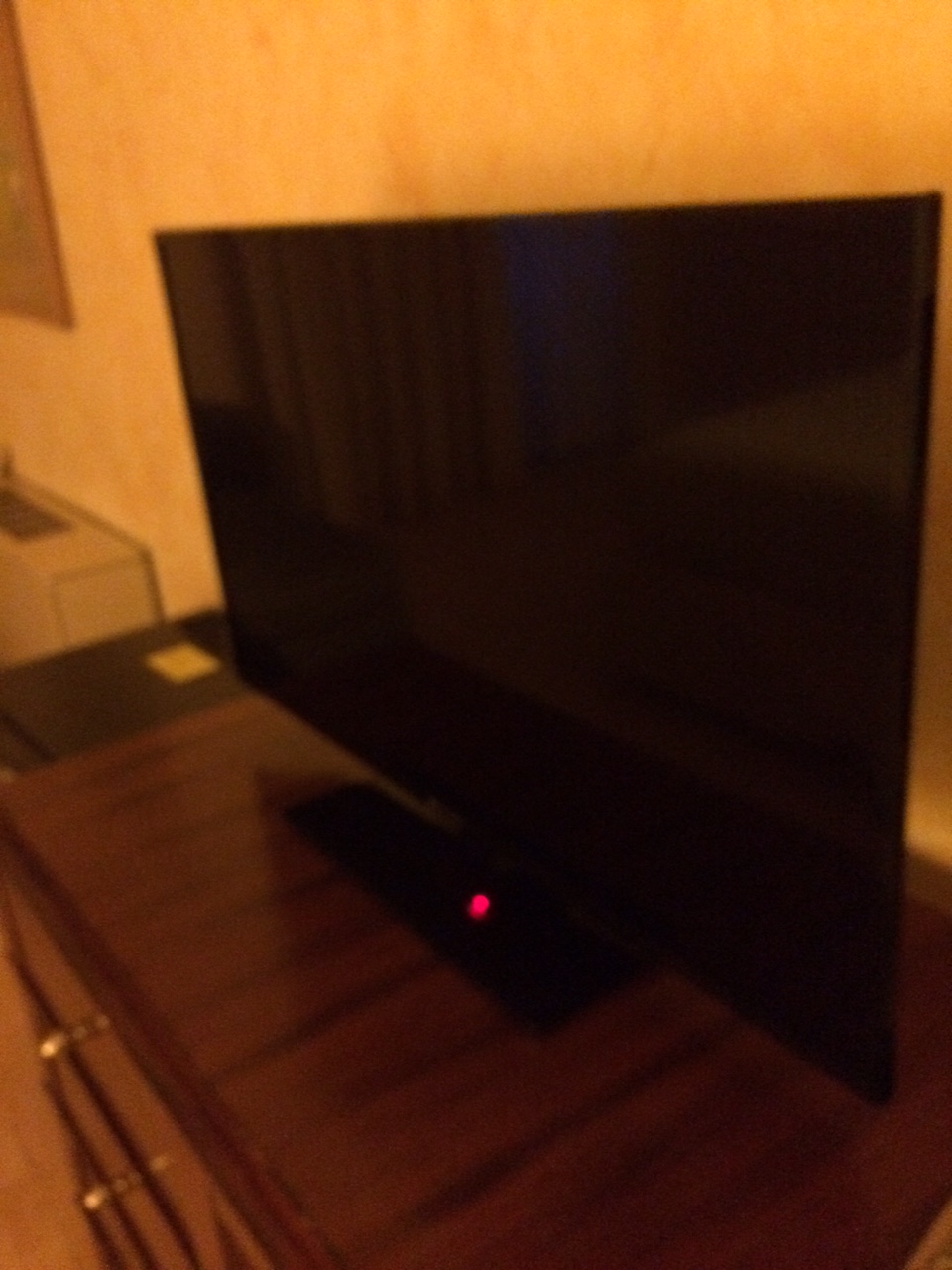
The TV was actually the newest thing in the room, which was a shame, because I might have watched the football game on it in lieu of watching it in the restaurant.
Downside? There was no TV remote in the room.
The last disappointment struck at 6 a.m. the next morning, when I was taking a shower. The room had a three-spigot liquid dispenser on the wall, which I’ve seen in other resorts: shampoo, conditioner, soap. The problem? No soap. Zip, zero, zilch.
Okay, so I washed myself with shampoo that day and probably smelled more minty-fresh than usual.
I dropped by the front desk before I left to verify that I didn’t have any room charges. The front desk host, a bit surly, informed me that since I booked through Expedia, there was no receipt. The attitude from the host decided things for me: I was not going to bother with the hotel’s breakfast area. These people obviously didn’t give a damn.
You might be wondering why I haven’t mentioned the name of this resort. Part of it is that I didn’t complain while I was there. Part of it is that I realized any complaint really wouldn’t make a difference. Some places are beyond fixing. I wondered briefly as I drive away how businesses get so bad. It isn’t something that happens overnight. It might not even be the result of a single dramatic event. However, slowly, bit by bit, some businesses lose their mission, their motivation, and their ability to sustain themselves. Such was the case of that hotel.
I won’t go back. I won’t give them the benefit of the doubt that they were just “having a bad day.” If I had had to stay longer than one night, I would’ve paid for an upgrade to some chain hotel with a decent reputation out of my own pocket and considered it money well spent.
But seriously: if you work in such a place–or own such a place–what the hell are you thinking about? How do you live with yourself? Life is too short to do a half-@$$ed job.
Continuing my riff from yesterday, this entry will discuss Disney’s Epcot Resorts.
My friend Sean suggested that the only way for an introvert to enjoy Walt Disney World was to stay in your hotel room. There’s a slight element of truth in that, if you’re seriously into avoiding people. That said, the Disney Resorts are a lot more relaxing–and most of them are less crowded–than the theme parks. The Epcot Resorts are favorites of mine and my family’s because we all like to walk and because they are within walking distance of Epcot itself.
As with the theme parks, the hotel lobbies, restaurants, bars, and pools are all subject to random loud noise on occasion. Don’t like crowds at check-in? Wait until evening. Don’t like screaming kids at the main pool? Visit one of the quiet pools. Go where the noise isn’t.
One thing that I find refreshing and curious about the Disney Resorts is that unlike the theme parks, they don’t have background music playing everywhere. This alone is worth the visit when I go on one of my walks. It’s as if Disney understands that they hyperstimulate everyone at the theme parks, so they try not to do it in the hotels. You can hear background music in the hotel lobbies, but that’s it. The hallways, outside areas, and rooms have mostly human noise. Below is my list of favorite quiet (or less noisy) spots in and around the Epcot Resorts. Again, the goal is to help the curious introvert find places to go, not to bash on the noisy stuff. If that’s you’re thing, go forth and enjoy. Just follow your ears, you’ll find it.
Disney’s BoardWalk
BoardWalk is half hotel, half Disney Vacation Club. Both the hotel and DVC sides have a quiet pool for those who want to chill out on a lounge chair. On the whole, however, BoardWalk is pretty loud, especially at night. It’s meant to be like an East Coast boardwalk (Atlantic City, Coney Island, wherever), with lots of bright lights, plenty of peppy background music, and indoor and outdoor restaurants. If you plan to stay there and want a quieter room, it’s probably pretty easy (and a bit less expensive) to get a room away from the lagoon (Crescent Lake), where all the action is. On the Villas side, there are water-view rooms that don’t face the BoardWalk. They’re a bit quieter.
Of the restaurants I’ve visited at BoardWalk, the quietest one was the new Trattoria al Forno, which is a pretty big place, and really not too quiet. However, I do give them points for giving me a room toward the back of the restaurant and for apologizing when they seated a large group near me. That said, most of the restaurants there are pretty loud. There is a nice, tucked-away lounge on the second floor (Belle Vue Lounge), but that can get crowded on occasion.
One nice store for the peace-seeking introvert is the Wyland Galleries. These folks feature both marine art (paintings of seashores, sculptures of whales/dolphins), Disney character-themed portraits, and other pieces, usually by a local artist. The artwork is expensive (usually north of $300), but you can get smaller prints for less. I’m not sure how much art they actually sell in a given week, but I’m betting most of the visitors are just there to browse, so browse away!
Walt Disney World Swan
The Swan and Dolphin Resorts are massive hotels, with the Dolphin set up with its own convention center; neither of them is owned by Disney, if that’s a consideration for you. I’ve not stayed at the Swan, though I’ve walked around their property quite a bit. The hallways are usually pretty quiet, as is the convention area, unless there’s an event in progress. Nicest quiet place to visit is Kimonos, their sushi bar. It can get loud, but often isn’t. A tad expensive, but hey, the rooms aren’t cheap, either.
Walt Disney World Dolphin
I don’t think I’ve stayed here, either, though I do recall visiting one or two of the rooms during a convention. I am not a huge fan of the decor–heavy on the pink and teal–but like the Swan it’s pretty quiet in the hallways. I was at a diner there with my sister once. Everything seemed perfectly normal until the staff disappeared. A minute later four or five of them were doing a dance routine in the middle of the floor. A bit random, but there it was. I’ve not eaten in too many places there, but my guess is that the Shula’s steak house is relatively child-free (would you take your six-year-old to a place with $50 steaks?).
Disney’s Yacht Club Resort
The Yacht Club is the gray side of the Y&B complex, with dark woods and a nautical theme in the lobby. I especially like their massive globe in the center. The grounds are well kept and ornamented with flowers and topiaries. They have a couple of saloons worth visiting: the Ale & Compass bar off the lobby and the Crew’s Cup lounge, which is adjacent to the Yachtsman Steakhouse. Crew’s Cup is larger and generally busier, as a lot of people have cocktails there while waiting for a dinner seating at Yachtsman; however, they do have their own menu as well. You might be able to find some quiet Zen time in the Ship Shape Health Club–they have a fitness room and spa treatments.
Yacht Club has two large table-service restaurants: Yachtsman Steakhouse (dinner only) and Captain’s Grille (breakfast, lunch, and dinner). It’s hard to say which one’s quieter based on my experiences at each, though a cast member said Captain’s Grille was usually quieter. The food’s better at Yachtman, IMHO, but more expensive.
Disney’s Beach Club Resort
Beach Club really doesn’t have a quiet restaurant. However, between their hotel and DVC halves, they do have a couple of quiet areas for reading–the hotel-side Solarium and the DVC lobby (I once did a telecon there with minimal interruption). The Solarium can have a TV going, but when it’s not on, there’s just the resort lobby background music.
There are a couple of saloons worth checking out at Beach Club: Martha’s Vineyard, which is a nice, quiet place to hang out during the day (they don’t open until 4 p.m.) and is relatively out of the way. Hurricane Hanna’s is the pool bar by the main pool area, Stormalong Bay. I’m not going to lie to you: this place isn’t quiet. It is next to the main pool, after all. However, the staff is always friendly and their tropical drinks are made well (they have the best rum runner on Disney property). There are only about a dozen seats at the bar, so even when there’s a line, people tend to take their drinks and leave.
And if you just need to get away from it all, the walkway around the Epcot Resorts provides plenty of quiet space. There’s also a separate walkway that leads from BoardWalk to Hollywood Studios. Plenty of leg-stretching room for you running fans, at any rate.
Bottom line: the Epcot Resorts have plenty of spaces–even in the public areas–for an introvert to find some quiet time alone while still providing convenient access to Epcot and Hollywood Studios. Go forth and chill out.
I admit it, I’m a bit of an oddity: an introvert who lives in one of the most popular tourist destinations in the world. I even visit Walt Disney World (and have a Florida Resident Annual Pass for same) on a regular basis. Am I lying about my disposition, or have I found ways to make the place “where the magic happens” suitable to my people-avoiding habits? The latter, I assure you. The fact that I’m a local and an Annual Passholder, however, means that I have more time to scout for potential quiet spots.
What follows are my general and specific thoughts on visiting my favorite part of WDW, Epcot (formerly EPCOT Center or the Experimental Prototype Community of Tomorrow). I’m not going to lie to you and say that Disney is for everybody. I have friends in some parts of the country who are inordinately proud of the fact that they have never visited WDW. So to each their own. This blog is written for those of you realize your introverted tendencies but still have Disney on your “bucket list.” There are ways to enjoy the place and still have fun. No, really. Allow me to ‘splain…
Overall Thoughts for the Introvert Who Might Want to Visit Epcot
Let’s start with the basics, in case you have a bigger aversion to crowds than I do:
If you’re allergic to large groups of people in one place, Disney is not for you.
If you don’t like standing in long lines (or even moderate lines) with groups of strangers, Disney is not for you.
If your idea of “fun” is actively against boisterous socializing and general warm-and-fuzzy attitudes derived from a lot of the sanitized fairy tales The Walt Disney Company has turned into movies, the Disney parks are not for you.
For those of you who are still curious, keep reading.
It’s important to understand that Disney equates loud and busy with “happy” guests. Walt Disney himself was pretty much an extrovert, and he seems to have inspired a generation or two of marketing people with the same ethos. A quiet area or time in the theme parks is considered a problem and an opportunity to fill the space with a new show, event, character greetings, or attraction. Quiet at Disney is apparently a bad thing. So the quiet places I’ve identified here might disappear at some point.
An Introvert’s Approach to the Epcot Theme Park
Rather than talk about the things to avoid, I will concentrate primarily on things you can do so you can keep your vacation time focused.
Let’s start with the best times to visit, which keep shrinking because (as I noted above) a “quiet” time at the parks is considered a BAD THING).
Early January (after New Year’s week/weekend) through President’s Day weekend
After Thanksgiving weekend until approximately December 18
Note that the Flower & Garden Festival and Food & Wine Festival were events conjured up to draw local visitors during down times, thereby shrinking the potential quiet times. Darn them.
General Note on Restaurants: People with small/young children generally but not always avoid the more formal table-service restaurants because they know how impatient/squirrelly young children get. If your choice is a counter-service restaurant or a table-service restaurant, your odds for a quiet meal are somewhat better at the table-service place. On the flip side of this, counter-service places can be gotten through more quickly, reducing the time spent with a potentially ornery infant/toddler/youth in the restaurant. Where possible, I asked cast members in particular areas for the most quiet or least noisy dining location in their area.
Entertainment
Disney and Epcot are all about providing experiences, so it’s not unusual to see multiple moments of entertainment in the World Showcase pavilions throughout the day. (Remember: quiet is a bad thing. Disney wants you to get your money’s worth, which means as much stimulation as you can handle.) If that’s too much for you–mind you, a lot of the performances are quite good–you might want to pick up an entertainment schedule when you enter the park so you know what’s happening when. If the performances themselves aren’t making noise, they’re at least attracting crowds.
International Gateway/World Showcase
Epcot is divided into two areas: Future World and World Showcase. Most guests enter through the Main Gate, which opens into Future World at 9 a.m. Guests staying at the Epcot Resorts (the Yacht & Beach Club Resorts, BoardWalk Resort, Swan, and Dolphin) enter through the International Gateway situated between the United Kingdom and France pavilions. World Showcase attractions, stores, and restaurants generally open at 11 a.m. Guests might be directed to Future World until 11, but World Showcase really doesn’t get rolling with operations and traffic until after Noon. Traffic from Future World starts to filter back into World Showcase until after 2 p.m. Again, these are generalizations; on busy days, such as during the Food & Wine Festival, World Showcase can be busy as soon as it opens.
Main Gate/Innoventions
Let’s start with the main entrance. There are going to be lines–they’re unavoidable. And once you get through the gate to show your ticket, you find yourself confronted by several planters/benches and beyond those, an array of marble monoliths that I’ve likened to Klingon architecture. They have little one-inch-square etched “Leave a Legacy” images of people that are numbered so the owners can find them later. Regardless, the planters are meant to funnel the crowd forward down a center aisle; however, you can stroll through the monoliths and avoid the butt funnel.
Source: Disney-Pal.com
Once you get past Spaceship Earth (the big golf ball-looking thing), you have a couple of “escape areas,” on the inner ring of Innoventions: by the Coca-Cola Ice Station Cool on the right and the Electric Umbrella on the left. These are outdoor seating areas away from the traffic flow.
Another set of “quiet areas” you can find–if you either smoke or don’t get outraged by cigarettes–are the smoking areas by Mission: Space, Journey to Imagination, The Land, World Showcase Plaza, International Gateway, between Morocco and Japan, Italy, China, and between World Showcase Plaza and Odyssey Center. I’ve probably been to most of these areas because I have an introverted father who smokes. Disney puts them out of the way for health/aesthetic reasons, but as a side benefit of this out-of-the-way-ness, they’re also relatively quiet.
Much of Innoventions West is pretty quiet, possibly because they’re in the process of refurbishing the area.
The Land
The Living with the Land attraction is pretty low-key and air-conditioned most of the time. It isn’t always quiet, as I discovered today, as a pair of ladies behind me chattered quite loudly behind me most of the time. I’ve also taken the Behind the Seeds tour twice (okay, yes, I’m a geek) to learn more about what they are actually doing agriculturally at The Land pavilion. It’s a nice way to spend an hour or so, and it gets you out of the usual traffic flow for an hour or so.
The Living Seas
By adding a “Finding Nemo” theme to this attraction, Disney has made it louder, more accessible to kids, and thus busier (their goal, if not mine). The upper level, where you’re looking at the fish, is still pretty quiet. And watching fish can be relaxing, yes? Another great place for fish-watching, dining, and enjoying relative quiet is the Coral Reef restaurant. I’ve only eaten once there, however, (sometime in the ’90s), and prices were pretty high. I imagine they’ve gone up since then.
Mexico
The San Angel Inn (table-service restaurant) isn’t too bad, though they do pack ’em in. The rest of the Mexico pavilion is pretty noisy, including La Cava del Tequila, which should be a quiet, intimate nook of a place but very quickly became a place for adults to hide away from the kids and get a beverage or three. On the plus side, they do have a very large selection of tequila and decent chips and salsa/guac/queso. You can either sit there and deal with the crowds or get a drink at the bar and take it to go.
Norway
The Akershus Royal Banquet Hall used to have a pretty nice, understated Scandinavian vibe, though I understand they’ve since added a character breakfast. They’ve also taken out the fun, low-key Maelstrom attraction and are in the process of adding a Frozen-themed attraction. Expect madness when that opens.
China
The waiting area for the Reflections of China 360 film is usually pretty quiet until 5-10 minutes before a show, as is the museum display featuring the Xian terracotta warriors. The Nine Dragons should be a bit quieter than the counter-service restaurant.
Germany
Not going to kid you: like Mexico, much of Germany is loud, especially the restaurant, which includes a lot of participatory singing and a buffet. The wine shop in the back corner of the pavilion isn’t too bad most days, however.
Italy
Disney added a wine/cocktail/tapas bar to the back corner of Italy called Tutto Gusto. It can get loud in there, but Mondays and Tuesdays aren’t too bad. There are two table-service restaurants in Italy; of the two, Tutto Italia is the more formal and quieter of the two (per a cast member I asked at Tutto Gusto).
United States
Most of the U.S. area is loud. The American Adventure attraction waiting area is well air-conditioned and can be quiet much of the time, with some quite good paintings on display. However, Disney decided that this was too quiet, so occasionally you’ll find a choir singing American songs from the 17th, 18th, or 19th centuries. On the plus side, the choir is usually good and stately. The attraction itself is all AnimaTronics and a nice patriotic pick-me-up that gets you out of the crowds for ~40 minutes.
Japan
Last week I asked a Japan cast member if the Japanese culture was loud or quiet. She replied that “It’s a little bit of both. We have some that’s crazy and some that’s quiet.” So you can find some nice bonsai gardens and a decent museum display, but the bonsai has been cut back (so to speak) from years previous and the museum display has tied historical Japanese culture to Anime and other cartoons to get the kids interested…which, of course, means more kids and more noise. Of the two table-service restaurants, the Tokyo Dining place upstairs is slightly quieter than the Teppan Edo place, which is more of a show kitchen/participatory experience. Tokyo Dining is a sushi place, with both a bar and individual tables, some with a view of the lagoon.
Morocco
The shopping areas in Morocco don’t get nearly as much traffic as some areas, and are also well-shaded. I have heard that the Marrakesh had belly dancers as part of the dining experience. Haven’t been there, not sure if that’s still a thing. However, they have added a new outdoor tapas restaurant, Spice Road Table, outside by the lagoon. The food’s decent, and there is shade, but you’re at the mercy of the elements (humidity).
France
My favorite attraction/film in World Showcase is Impressions de France, which is now terribly dated, having been there since the park opened in 1982, but it features a lot of gorgeous scenery and soothing symphonic music. The Chefs de France restaurant was quite good, but pretty noisy. There is another restaurant upstairs, Monsieur Paul, which I have not visited yet, but which I am guessing is more upscale, quieter, and expensive. If anyone has info on the place, I’d love to know. There’s also a fun ice cream/gelato bar in France that allows adults to throw in a shot of Gran Marnier or other adult beverage into their dessert…the place is not quiet, however, nor is much of the rest of the pavilion. The gardens in back are well tended and can be quiet, but only when the park attendance is low overall.
United Kingdom
If there’s no Beatles or other knockoff band performing out back, the gardens in the UK area are nice and quiet. Also, the Rose & Crown restaurant area (not the bar) is comparatively quiet. The R&C bar can go from quiet to loud very quickly.
Canada
The stairs/ramp leading to the Canada 360 film are pretty quiet. They’ve replaced the original (again, it was vintage 1982) Canada film with a new version featuring Martin Short. I think they could have done better with another Canadian export–William Shatner, Alanis Morrisette–someone besides Martin Short. But hey, that’s me.
If you get burned out by the number of people at Epcot–and it was inexplicably quiet today, a day in what has been considered peak season–you can always escape through the back door at International Gateway and visit one of the Epcot Resorts. I’ll cover them in another entry.
Dungeons and Dragons, the original dice-based fantasy role-playing game, was coming into its own around the time I was hitting puberty. I hadn’t really paid it much attention until invited to the home of a classmate to play the game.
For those unacquainted, D&D is an interactive version of Lord of the Rings, where a group of individuals with self-selected character types (wizard, thief, warrior, etc.) enters a castle, dungeon, etc., encounters strange, beautiful, or grotesque people/creatures, and seeks to obtain treasures or achieve a quest of some kind. The Dungeon Master (DM) talks the group through what they’re seeing as a narrator, and the individuals, via their characters, respond aloud to the described environment. Sometimes they try to fight something; sometimes they try to steal something; sometimes they try to commit sins of a sexual nature (we’re talking adolescent boys–it’s gonna happen). The DM rolls one of several multi-sided dice to determine the likelihood of the character succeeding, and play continues. Once it was explained to me, I figured I could play along. I was wrong.
Yes, it is entirely possible to be too much of a dork to play D&D. I was one of those. Here’s why:
D&D is primarily a collaborative storytelling activity. By age 10–my first exposure to the game–I was already writing stories of my own. Storytelling, for me, was a solitary activity. D&D took too long for me. I was and still am a bit impatient with people. The group needs to get somewhere, and every individual wants to throw in their two cents about where to go and what to do. Mind you, that’s reality. I understand that. And good storytelling has characters with differing viewpoints. However, the act of writing is usually a one-person endeavor. A single author can shape those viewpoints into something coherent and less like a mob scene.
Group dynamics being what they were, I was the newbie in the game (new character, essentially orc fodder for any random creature that might cross the group’s path), and I was probably the least assertive, least popular kid in the group. So I wasn’t allowed to say or do much.
In the adjoining room to where the guys were playing D&D was a pool table. My best friend and I started playing pool and “phoning in” our responses to the game. Eventually the other guys got annoyed with us and realized we weren’t paying attention. At one point, someone called in, “Hey, I’m going to pick you up and use you for a shield!” I said, “Fine, go ahead!” My character died, I won the pool game. I consider that a fair trade.
I tried the game a couple other times, once at a friend’s house, once in a gamer’s group. My brain was just not wired to work in someone else’s story. I had my own stories to tell, and they were usually set in space, not some medieval castle. Come to think of it, that also might have affected my interest in the game. There were kids at the time who got so into it that they got addicted to the experience or even killed themselves over a negative outcome in the game. My mother, a bit of a worrier, asked me about it. I reassured her that I would never get to that point because I was no good at the game. Ditto with video games. Sometimes social ineptitude and poor eye-hand coordination can be a benefit–who knew?
Looking back, I can see that this was really an introvert problem. Again, storytelling was a private activity for me. It allowed me to assert myself in a way that didn’t require me to out with my peers. (Indeed, fiction was a way for me to overcome that very problem.) I got to make the decisions, tell one cohesive story, let my point of view win the day, and wasn’t being shoved around by others, verbally or otherwise. Fiction reading and writing are excellent escapes for an introvert, as they allow the individual to either concentrate on another world or create his/her own with (ideally) minimal interference.
I’ve heard some of my friends say that D&D helped them with their social skills. Good for them. That was not a good social outlet for me because of the dynamics of the situation and because of the way I incorporated fiction into my life. If we had just been there to talk about Lord of the Rings, I probably would have been fine. However, when it comes to collaboration, I’m better at real-world, task-oriented activities (I at least learned that much). But please, let me tell my own geeky stories on my own.
From a very young age, I can remember being told that I “take things too seriously” or “take yourself too seriously.” I’ve always found this a curious criticism, because it continues to the present day and I still can find nothing wrong with the behavior.
Is life meant to be enjoyed? Most likely. We humans are wired for it. I manage to do so when I can, in my own ways: reading, writing, traveling, enjoying the companionship of friends and family, enjoying meals and fine beverages, occasionally seeking out the company of a closer partner. These things make me happy. I recognize that my tastes run to the cerebral and the serious: my primary forms of entertainment are science fiction, philosophy, and history. I recognize I can get grouchy on occasion and so try to keep a balanced attitude toward my life, considering myself neither as evil nor as brilliant as some of my delusions would have me. I can even laugh at myself on occasion.
But yes, I take some matters quite seriously, or personally.
I believe life is a serious business, something we are granted for mysterious reasons still unknown to us. Given how rare and precious the gift of life is, I try to make my life worthwhile or productive. I dislike a lot of frivolity and what I would call serious wastes of time (television sitcoms and cinematic romantic comedies come first to mind). For reasons clear only to myself I take rudeness and malice quite personally, especially when they’re unwarranted. I suppose if I have a redeeming trait in the midst of all my hard thinking, it’s that I prefer to treat people with kindness until they give me a reason not to do so. It was not always so, but I’ve made that effort in my 30s and 40s.
If someone disregards, insults, or hurts me, yes, I take that personally, and yes, I take it seriously. Good grief, why shouldn’t I? Is meanness something to be laughed off? Is evil something to be tolerated? That said, it usually takes a lot of pushing and petty cruelty before I push back. And yet when I do push back, I’m then told that I take things too seriously.
Somewhere early in my childhood, I suppose, I developed a very strong sense of personal honor and justice–medieval concepts, perhaps, but real enough. I don’t take it well if I feel I am being treated badly without cause. With cause? Okay, I can see that. If I was rude to someone (I’m not perfect), I don’t expect the other person to be joyful to see me, but I do my best to at least manage politeness. On the flip side, if I have done someone a good turn, I expect that to be recognized. Likewise, if I have done a stranger no direct harm, I dislike being treated badly.
So yes, I take life seriously. As far as I know, this is the only life I have. Some have the attitude of “Life is short, have a good time” or “Life is short, don’t take things so seriously.” I think the opposite. I belief life is short, so I should make an effort to be a good person. Or even that because life is short, it’s wrong somehow to spend it on cruelty and anger. I’m easily hurt, but more often than not the first to apologize for my anger.
And yes, it is still possible to have fun and be happy and be kind to others while responding to meanness or assaults on my person or character in a personal matter. It means, in the end, that I wish to be a decent guy and that I’m willing to stand up for myself so that I will be treated as such.








 The Real Bart Leahy