
If you tried to follow every piece of meme-based “wisdom” on Facebook, you’d soon find yourself in an utter dither about what to do with yourself. “Out of sight, out of mind” wars with “Absence makes the heart grow fonder.” “Continuous improvement” dukes it out in your head with “Be kind to yourself and accept yourself as you are.” I’ll take some time today to untangle that second knot. Your approach could vary, but then that’s part of reality, isn’t it?
Category: Philosophy
What Good Am I?
Edith Keeler: Did you do something wrong? Are you in trouble? Whatever it is, let me help.
Captain Kirk: “Let me help.” A hundred years or so from now, I believe, a famous novelist will write a classic using that theme. He’ll recommend those three words even over “I love you.”
–Star Trek, “The City on the Edge of Forever”
I don’t invent machinery, I help explain and market it. I rarely speak at conferences, but I have volunteered to work at or run them. I am neither a scientist nor a cheerleader, yet I help keep a bunch of them communicating and organized. I don’t write original ideas in paper or book form, yet I contribute editorial and narrative support to others. I do not formulate bold new space policies, but I do help polish the language and try to share them with others. I do not build, I assemble. I cannot program a computer, but I am a quick study as a super-user. I am rarely a leader, but I make a good second or third in command.
I am not handsome or dramatic enough to be a star, but I’d make a decent character actor. I might not form some amazing partnership–personal or professional–but I am likely to introduce people who do. I don’t come up with new philosophies or remarkable spiritual insights, but I will take them into my soul and integrate them into my life so others can see the results. I’m unlikely to be in a parade and much more likely to be one of the people cheering from the side. I don’t write great books, I read and review them.
Why am I sharing this? I suppose because I sometimes doubt the value I contribute. And maybe because as I get older I’m getting more realistic about what I am likely to accomplish (or not accomplish) in life. There’s a lot of emphasis in our culture on being the star or the originator of great things. There isn’t much glory attached to being just a member of a team. Yet my motto for years has been “I’m here to help,” and I try to prove that with every opportunity I can. There are those who originate and those who must deliver. Somewhere along the line, I learned the value of helping make dreams into reality even if it isn’t my dream. Maybe I’m content to let my life be this way, with the trust and hope that what I’ve done has been worthwhile. At the end of the line, I’ll hear, “Well done, good and faithful servant!” and that will be enough.
47
By the time you read this, I will be on vacation, not home. I decided to get out of town, even if it’s still in Florida. Still, I try to do one of these birthday essays once a year just as a way of checking in with myself and with you, my readers (I appreciate both of you) to see where I am with respect to myself or the world.
I’m coming more and more to know the sort of person I am and the sort of person I am not, and I’m willing to accept both. I am very much an introvert, for example. I can go hours or even days at a time without engaging in much verbal conversation. Much of the time my apartment is even quiet as I start my day: no radio, no TV, just me, the sounds of my daily routine, and whatever foolishness is buzzing about in my head. This does not mean I dislike people, merely that I don’t seem to require the presence of another person in my domicile. In fact, I’m usually more relaxed if I don’t have company. My habits are those of someone who requires a “Fortress of Solitude,” and is increasingly aware that such a lifestyle is likely to keep people at a distance. So be it.
I am still not an athlete, nor do I desire to be. Those of you who feel the urge to climb a mountain or run a marathon–God bless. You can take my turn. I won’t stop you, but don’t feel you have to invite me to your quest. My favorite physical activity is walking through aesthetically pleasing landscapes, interesting architecture, or preferably both. I can walk anywhere from one mile to ten at a stretch and do not notice or mind the passing of time. It’s hard to say what I’m thinking about on these walks. Often I’m not thinking at all, but merely using the exercise as a way to clear my mind and the scenery as a way to relax it. A long stroll through a museum would probably do me just as well.
I’m a very serious person, despite my verbal habits of wit and sarcasm. My reading list consists of a lot of philosophy, history, science fiction, and other such things that help me ponder or understand Big Questions. It’s all very abstract, dry, and contemplative. My musical tastes have been shifting, too. Not as much ’80s pop or John Williams soundtracks while I’m writing, more Mozart, Beethoven, or other classics.
Vexed by some of the rather angry chatter I’ve seen on Facebook, I’ve ratcheted down that hourly habit to something closer to a brief daily lurk before I find other things to do. The extra free time has allowed me to catch up on my long-neglected reading list, and so I’m trying to take a good whack at reading those books I’ve meant to read for a decade. So far, so good. Thirty-four books read this year; only 197 more to go before I can start adding books back onto the list again. I’m sure some will come to mind.
On the whole, thanks to a very loose freelance schedule that still manages to pay the bills, I’ve become less of a workaholic. I’ll do whatever work is in front of me gladly until the pile has dwindled, then I set thoughts of work aside and go read a book or take another walk in the vegetable-steamer heat of summer in Florida. Slowly, I’m learning how to be inactive, to take pleasure in downtime. This is a big shift, as I spent much of my time from 25 to 45 thinking about work. On the whole, I think this is a good thing.
Politically, I remain a gentleman of the Right, though more and more I find myself in the Libertarian camp, especially as the two most prominent prospects for president this year fill me with equal dismay. I maintain very strict standards for myself (and very definite opinions about others) but I have no interest in inflicting my personal morality on other people. Nor am I particularly interested in having someone else’s ideas foisted on my unwillingly. I live by an increasingly outmoded notion of “Live and let live.” I figure it’ll be appreciated somewhere down the line.
Otherwise, to quote that great philosopher Popeye, I am what I am: a graying, somewhat overweight, middle-aged and self-contained Anglo who usually has a book, pen, or computer in his hand. Eventually I’ll think of something useful to do with all the ideas I have in my head, but for now I keep on living my life, hopeful that eventually it’ll all make sense at some point or, barring that, I’ll do something constructive to do with myself that makes me feel like the journey has been worth the fare.
And so I celebrate living another year on this blue planet, curious to see what happens next.
Do We Belong Among the Stars?
For the last month or so, it has really sucked to watch the news. It started with the terrorist attack at a gay nightclub in my home town of Orlando, Florida, and it quickly devolved into mayhem and macabre behavior in Istanbul, Baghdad, Kabul, and elsewhere. Social turmoil roils abroad and at home, with the racial divide at its all-time worst level in years and law enforcement-related shootings and politicians of all stripes fanning the flames. At the same time, we have contentious elections and presidential candidates who don’t have the full confidence of the nation to solve the problems we face.
There have been worse times in human history, but there have also certainly been better, and right now we seem on one of those downhill slopes that does not bode well for peace or prosperity.
And while all this is going on, I’ve been contemplating human beings going into space. Not just to the International Space Station, our 16-year effort to engage in international engineering and science. No, I’m a space advocate by inclination, which means I spend some of my free time writing things to encourage policy makers or the general public to get behind the notion of going back to the Moon and on to other places in the solar system. Maybe even different solar systems eventually.
I can hear some of you now: For gosh sakes, why?!? Be realistic. Don’t we have more important things to worry about? Don’t we have better things we could spend our money on?
Maybe. And then again, maybe not. Space advocacy—all geekiness aside—has lofty goals for humanity:
- Improve our technologies out in space and, by extension, here on Earth.
- Expand and improve Civilization.
- Ensure that humanity survives somewhere in case there’s some sort of massive war or other disaster here on Earth.
Our imperfect species
And yet the question must be asked: are we capable of putting aside substantive and petty differences to unite for the purpose of expanding out of this world? Some of my more cynical friends would even ask, should we?
I won’t deny that there is more than a helping of utopian optimism in the space advocacy community. Some of it is born out of the Star Trek vision of a positive future, some of it born out of perhaps-unrealistic expectations about how space settlement will affect us as human beings. We tend to accept only our best and brightest into the astronaut corps, and the Russians, Chinese, Japanese, and Europeans set high standards for their space voyagers as well. And yet we’ve had astronauts who cheated on their wives, one astronaut who drove cross-country in pursuit of a romantic rival, and another former astronaut charged with killing two kids in a drunk driving accident.
Astronauts are people, too. They’re not mass murderers, to be certain, but neither are they immune to the frailties of our species—rage, lust, pride—pick your deadly sin. For as much as the late Gene Roddenberry and others might believe that we will improve as a race, I’m not so certain.
And yet…
Despite all my misgivings, I still get angry with people who suggest that humanity is so far gone, that we have done such awful things to ourselves and the Earth, that we should stay here so as not to contaminate the rest of the universe. I consider that, to put it mildly, balderdash. For all our hubris and evil—and heaven knows there’s plenty of both to go around—I’m not convinced we’re that far gone.
Human beings are also capable of great ingenuity when it comes to solving problems. The tech blogs I read regularly identify new technologies for or from space that can solve many of the environmental challenges we face here on Mother Earth. Some of them are at a technology readiness level (TRL in NASA-speak) of one—meaning only theoretical. Others are in testing. Some are operational—level 9.
There have been, are, and will be lessons learned space that can help make life better here. That’s been proven many times. The effort to investigate and explore other worlds continues to pay dividends and will do so as long as we continue the effort.
But should human beings establish permanent settlements on the Moon, on Mars, or on stations flying above our heads in orbit? To borrow from one of our more popular space operas, when Luke Skywalker asked his mentor Yoda “What’s in there?” The little green oven mitt replied, “Only what you take with you.” So will it be when we send people to other worlds to be permanent residents.
We will have capitalism and communism and socialism. We will have greed and lust and rage. We will have politics and regionalism and struggles for power. We will have religious practices, both sublime and sinister. We will have love and generosity and kindness and heroism. We will have families and strong communities and people we admire. We will take all that we are and move it into the harshest environments imaginable because we seek glory or power or wealth or military advantage or freedoms or ways to fix the environment on Earth. We will take all these things with us because that is who we are.
What is it all about?
We have international treaties and statements of intent to prevent specific types of conflict from happening. We have banned weaponry in space, though we continue to develop space weaponry. And even Star Trek, optimistic as it has been, uses phasers and photon torpedoes.
Some would prefer that we establish only a small set of justifications for going into the space frontier, but until space is opened up to multiple interests, we will most likely not go. (And for those who think we are irredeemable as a species, that would probably be just fine.)
We’ve had great plans to explore the ocean floors or polar regions, yet those places remain nearly empty and they’re easier to work with than the Moon or Mars. “Science” is not enough of a motivator to build in those places and so we don’t—such was the intent.
So should we extend human civilization to other worlds? A similar question to ask might be, “Should you and your spouse have a child? If so, why?” The bottom line is that we have children to perpetuate ourselves. We do so out of love for our partners or hope for the future. Mind you, I don’t have a spouse or children, but I see that as a reflection on my limitations as a potential spouse or parent, not because I think marriage or children are bad things.
I believe we’re capable of doing good—enough good in the future to warrant staying around and making more of ourselves. In similar fashion, I believe that we will and should one day spread out into the solar system. No, it will not be Utopia. But we can try to make things better than we’ve had them, one person or instance at a time, just as we keep trying here on Earth.
That’s still worth doing, regardless of how the headlines read
Why Do I Write?
I write to pay my bills. I’m a technical writer, that’s what I do. It’s a great pleasure that I’m able to turn something I’m able to do reasonably well into cash and groceries.
But that is nonfiction, and work done on behalf of someone else’s idea or business. I still write for myself. Why?
First, it might be helpful to explain what I consider “writing for myself.” This would include:
- Fiction
- Poetry
- Journal writing
All of these activities serve personal, what some might call “antisocial” purposes because they are for my own benefit and enjoyment, not necessarily others’. Note that I am not a published/paid writer in any of those categories, so why do I bother?
I’ve been writing fiction since 1978 or so. I’ve been writing poetry since 1984 or so. I’ve been keeping a journal since 1988. Again, not for profit. Occasionally I’ve let others read the stuff, but not as a regular habit anymore. So why do I bother?
Maybe writing is just a hobby? A literary form of therapy? I write in these various forms for my own personal enjoyment. Sometimes I learn something. Sometimes I just feel better afterward. Sometimes I want to say something about the state of the world (or my reactions to it) and saying it straight out is not the most effective way to do it. If I have things I want to say or think about, why not just mull them over in my head? Why bother with the physical activity of putting pen to paper or fingers to laptop keyboard?
Maybe because writing is my way of leaving monuments. I was here, I lived, I had ideas, I mattered: here is the proof.
If you write, what compels you to do so?
What Myths Shape Your Reality?

Human beings have been telling each other stories for millennia. Why? What, exactly, is a story, and why do we bother?
A story is a narrative about an individual or group in conflict with the universe–another person or people, nature, forces within, etc. A story includes moments of danger and suspense: will the hero(ine) survive? Will they succeed in their mission? How will that success occur?
Stories fulfill a deep need in our natures for our existence to make sense. We want to believe that we can overcome dangers that face us in this universe. We want to believe that the values we defend mean something and that, even if our existence ends, those values will continue on after our death. The interplay of good and evil (or protagonist and antagonist) engages our emotions. The ratcheting up of suspense adds to the suspense of the moment and raises the stakes. All these things tell us what stories do, but they don’t tell us what stories can and do say.
Looking over human history, we’ve had stories that involved gods–superhuman versions of ourselves–as well as human heroes and villains, dragons and other terrifying creatures. We have told stories that challenged the forces of nature; defined ourselves as independent beings; saved villages or nations; fought tyrants or ambitious people like ourselves; and confronted the dark forces of the emotions or motives within ourselves. We continue to tell stories that force us to confront the dangers of the technologies we create or the evil we do in the present day.
Sometimes we tell these stories in the language of the present day. Sometimes we set them in the past. Sometimes we set them in the future. Sometimes we set them in realities completely different from our own. The motives for storytelling–even if the environments, moral structures, heroes/heroines, or tactics and tools change–remain the same. We are always trying to explain ourselves to ourselves. The stories that impressed me the most at an impressionable age were from science fiction and religion, giving me forever an interest in science, technology, and philosophy.
So the question I have for you is: which stories have you read (or written for yourself)? Which stories resonated with you and told you, in a convincing way, “Yes, life is like this, it’s about this, we should be this?”
How Original Are You?
It’s taken my over 30 years, but I’ve come to realize that being intelligent or a quick thinker doesn’t necessarily make you original. I wrote a lot of fiction in my youth (8-28), but that activity eventually passed. I became more interested in studying what other, brighter minds than mine had created. Some of that might be based on my day job, technical writing, wherein I translate engineering concepts (developed by someone else) into prose that other people can use on a practical basis. I’m not flashy in my writing, nor particularly emotional or dynamic. There’s a reason I’m a technical writer, not a marketing copywriter.
I really should have been a history writer, recording the thoughts and actions of brighter, better minds. And I might still do that some day.
What set me on this train of thought was not a rereading of my own writing (egad, perish the thought!), but simply reading about the history of a country I plan to visit someday soon. There were people in that nation’s past with more ambition, more exciting lives, more ability to change the world than I will ever have. In the present day, I can work for those people–Jason Hundley at Zero Point Frontiers and Darlene Cavalier at Science Cheerleader are true forces of nature–and I have just enough talent to be able to translate their ideas into something practical. I just lack the ambition or imagination to be them or to create the same level of dramatic enterprise.
Perhaps this is why I’m happily middle class, or middle management. I can execute other people’s brilliant ideas, I just don’t have the talent to come up with the bright ideas myself. And the thing is, at some level I’m okay with that. Changing the world involves too much struggle and aggravation. And, again, maybe being “bright” just isn’t good enough. If you’ve ever seen the movie or play Amadeus, I’m more like a contented Salieri than an effortlessly brilliant Mozart. I work to pay the bills, quite often. I’m not writing for the sheer joy of creation. I envy those people whose minds are exploding with new ideas…but would I want to be them? Not necessarily.
I have become a conduit and amplifier of brighter people’s good ideas. Am I okay with that? I suppose I’ll have to be. As was said in a Star Trek episode, “You can’t just wake up and say, ‘Today I will be brilliant’.” Raw talent can’t be taught. I’ve got to make the best of who and what I am. That’s not so bad, is it?
What Are Your Priorities When You Car Shop?
This past week a friend asked for advice on car shopping as he’d not done it in a while. Perhaps you will find it useful as well.
In 2002, I gave up on American-branded cars. I’d driven Chevy, Buick, Olds, Saturn, Pontiac, and God knows what else. I bought a 2000 Honda Accord and loved it right up to the point some idjit drove out in front of me and killed it. Figuring I’d like another Accord, I got a 2009. I have been much more disappointed, though it took me a year or more to figure out what I didn’t like–the lines of sight are so bad that I backed into another car, a pole, and a garage door because I was unable to see how close I was. Surprisingly I’ve managed to hang onto it without killing myself. I’m about $3K away from paying off the Accord, and I’ll be glad to stop the paying. If I had steadier employment, I’d try something else–maybe Toyota, maybe Nissan since I’m doing work for them.
Anyhow, if you ask me what my biggest issue is when buying a car, it’s reliability–meaning how often is it between replacing major components. All the American-branded cars I had were just awful. Air conditioning, brakes, steering, wheels, interior: all sorts of major things were breaking down and I was plunking down a lot of money for big-ticket problems at a time when I didn’t have a lot of money. I’d test-driven Toyotas and Hondas and found (in 2002) that Honda Accord was a vehicle I liked. The 2009 model, not so much.
Here are my priorities, more or less in order:
- Reliability/mean time between failures
- Body type (sedan) and style (something not too boxy)
- Color (interior and exterior)
- Age/Mileage (I’ve never bought new, so I try for something <2 years old and with <20,000 miles on it–harder to come by in the current economy, but that’s still a good guideline)
- Automatic transmission
- Field of view through the windshield (one reason I don’t buy Chrysler products, for example, is that while their “cab forward” designs are sleeker than anything, they provide surprisingly minimal visibility)
- 4-cylinder engine (fuel economy/consumption)
- And if I’m feeling frisky when I buy, I’ll look at options like a sun roof, better stereo, and power seats/windows.
Just noticed that I didn’t include “price.” I guess my price range depends more on how much I have on hand and how much I’m willing to spend on a monthly payment. The only negotiating I’ll do will be to get the monthly payment inside my “window.”
Consumer Reports is worth consulting–Father Dan swears by it. If/when I buy another vehicle, I will probably use the same criteria, with an additional line item for visibility of the vehicle’s front and back ends. Live and learn.
And if there’s one thing I learned after numerous “experiences” with dealerships and private owners, I will from here on stick with Carmax. I just want to buy a car, not negotiate and play games for three hours. I’m a retail kind of guy. If I want a specific car and it matches my needs, I’ll buy it. If it doesn’t, no amount of arm-twisting or wheel-dealing is going to change my mind.
I hope you find this useful.
What’s the Most Important Fact You Heard in That Meeting?
One task I enjoy doing as a professional communicator is taking meeting notes. Without bragging too much, it’s a thing several leaders have valued in my skill set because I can listen to a lot of information and identify the main point or the most important point, which is a slightly different skill set. My mother would call it “reading between the lines.”
I haven’t written about this topic before, partly because I try to avoid bragging, but also because I am uncertain how to teach others how to do it. I will give it a shot here, though (the word “essay” is French for “try,” after all).
Summaries (or lack thereof)
Some meeting leaders are kind enough to summarize a decision that was made or an event which has transpired, making it easy to pass on “the big news” afterward. However, sometimes meetings end ambiguously, without a clear decision or summary. Could that be the most important point? If the sole purpose of the meeting was to reach a decision, yes indeed.
Scope of impact
You could be listening to fact upon fact upon fact (try sitting through a monthly status meeting for a launch vehicle sometime). This mass increased by X pounds. The thrust of the engine increased by Y percent. The flight test moved to Z date. Obviously if you’re a structural or propulsion engineer, you might have different priorities. However, if you need to go back and report on a fact that affects everybody, which item will get your attention? The flight test date, obviously.
Other “hot button” items are facts that affect the budget, workforce, or ability of an organization to deliver a product or service at the agreed-upon level of quantity or quality. In short, will something that you heard affect the organization’s ability to accomplish its primary goal or mission?
Emotional impact
This could take many forms, from good to bad. Did someone get a promotion? Have layoffs been announced? Did people come out of meeting upset? Angry? Elated? Was there a long-drawn-out argument? Human dynamics are important and can sometimes be more important than any facts that are announced during a discussion.
Other thoughts
The “most important” fact in a meeting will sometimes vary by the priorities expressed by your organization, culture, or individual leader. When in doubt, it doesn’t hurt to ask: “Is there anything you want me to listen for?” Sometimes priorities change. Sometimes (and I’m sure every meeting leader is about to cringe reading this), there is no important information to come out of a meeting. It happens. Odds are, if you say that “nothing important” happened, you can record every individual fact at an equal level of importance and let the meeting minute readers make their own judgments. Still, prioritizing information is a useful skill to have. Keep it in mind the next time you’re sent to a meeting.
Making a Better Future
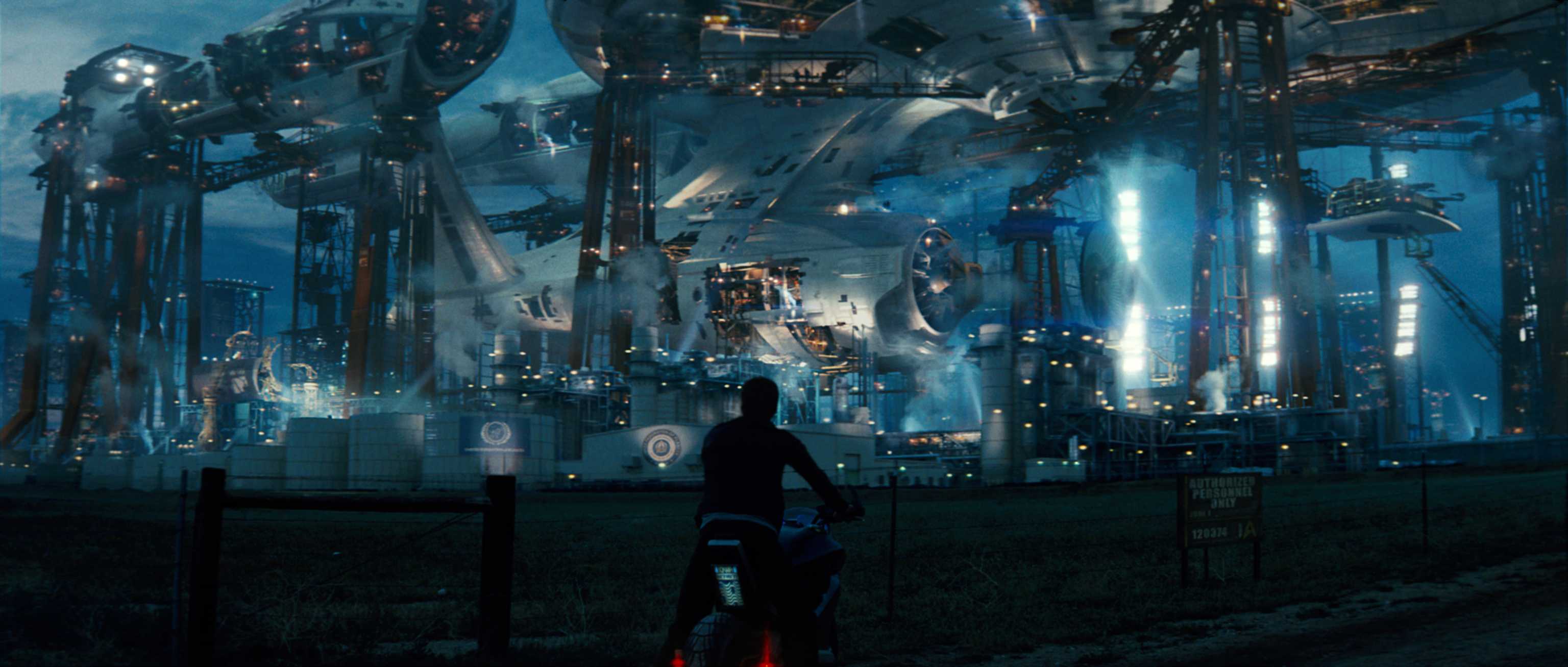 I’m a big fan of Star Trek. I like the notion of a high-tech, idealistic future with attractive architecture and clean streets. So I do wonder, occasionally, what it will take to get there and whether specific policies enacted now can make that future happen. Or, if not THAT exact future, something like it.
Politically it seems like most of the folks interested in making the environment clean are on one side of the political spectrum–but their primary political methods for ensuring that we get that clean environment are coercive: more government rules, regulations, and taxes. Such policies interfere with economic growth and even freedom in some cases, causing many folks to resent the policies even if they result in a better environment for everyone.
On the other side of things, we have capitalism, which depends on continual growth, which means continual expansion of products and services, which in turn means we must extract more resources and very often create more pollution. Many people believe that growth can continue unchecked without any consequences.
This endless hostility between environmentalism and economic growth doesn’t need to be permanent. There have to be policies that can be pro-economic growth that also support the environment. I’d like to see cleaner streets, self-driving electric cars, clean air and water, trash heaps used for resources or fuel, and more greenery in cities and towns.
- Why not talk tax breaks (not subsidies, which are direct payments of taxpayer monies) for such technologies?
- Why not streamlined regulations to bring newer, safer nuclear power plants online?
- Why not treat space as an economically undeveloped area (“enterprise zone“), where space-based solar power and asteroid mining can be developed tax-free for 20 years until the space above our heads has an economy strong enough to produce growth?
- Why not zoning laws that set aside space for and encourage greener technologies?
- Why not capitalist-based incentives to develop carbon sequestration or other technologies?
 Science fiction author David Brin calls these technological efforts TWSBDA (Things We Should Be Doing Anyway). If you find a way to provide incentives for building world-improving technologies that lead to profit (without direct government spending), you might eliminate some of the political friction in the climate change debate. We can do all these things–create a better, growing economy with more clean energy and more technology–without coercion and without sticking it to “the system.”
Or perhaps I’m just being too optimistic again. Jeez, I hope not. I really want to see someone build a starship.
 The Real Bart Leahy